Panu Di Pinti
An inheritance of skill, dignity, and belonging.
Panu Di Pinti is a distinguished expression of Guinea-Bissau’s cultural heritage. Its weaving traditions, closely associated with the Manjaco and Papel peoples, reach into the precolonial past, with historical accounts placing their practice before Portuguese arrival on the Guinea coast in the 1400s. Generations of makers have sustained this knowledge through family teaching, skilled work, and cultural responsibility.
Working on a traditional loom, artisans interlace cotton threads into patterned bands, which are carefully sewn together to form the finished cloth, a process requiring patience, precision, and intimate knowledge of the craft.
A cloth that accompanies life.
Throughout Guinea-Bissau, Panu Di Pinti holds an honored place in weddings, rites of passage, the installation of traditional leaders, funerals, and ceremonies of remembrance. Its meanings vary across communities, occasions, and designs.
To present someone with Panu Di Pinti is an expression of honor. Its woven language has also carried messages of resistance to colonial rule, preserving forms of expression and knowledge within the textile itself.
Panu Di Pinti embodies the strength of Guinea-Bissau’s people, who fought for their freedom and reclaimed their sovereignty, proclaiming independence from Portugal on September 24, 1973.
A heritage recognized and protected.
On April 10, 2025, the African Intellectual Property Organization—Organisation Africaine de la Propriété Intellectuelle (OAPI)—formally presented the registration certificate for Panu Di Pinti designs and models in Bissau. This milestone strengthened intellectual-property protection for the registered designs and recognized the textile’s place within Guinea-Bissau’s cultural and ancestral heritage.
N’nanba begins with reverence for this inheritance and the people who sustain it.
Through heirloom clothing and home goods, our purpose is to support economic health, cultural preservation, and celebration, inviting the world to appreciate Panu Di Pinti while honoring its enduring significance.
One cloth, many names
Spoken across Guinea-Bissau.
Across the country’s many languages, the same cloth is known by many names.
- Kriol
- Panu di pinti
- Portuguese
- Pano de pente
- Manjaco
- Blendje · Binhighite
- Papel
- N’ghalu siri
- Balanta
- Nhomi far · Nhomi tidna
- Mandinka
- Dar fanô
- Fula
- Uderlepi
Source: Institute of African Textile, “Pano di Pinti: Rebuilding Guinea-Bissau’s Textile Memory”, IAT Magazine.
A woven language
Every motif carries meaning.
The patterns are read as a visual language. Motifs can represent animals, natural elements, social messages, historical references, and family identity, knowledge passed through generations without written archives.
Panos Baguéra
Bee motifs
Udju di baka
Cow’s eye patterns
Polôn
Tree-inspired structures
Panu-letra
Symbolic or alphabetic forms
Two hands, one loom.
Historically, the traditional loom could be worked by two weavers in tandem: one managing the shuttle, the other setting the pattern threads from behind. Some artisans still practice this today; others weave solo. Traditionally men wove, while women prepared the fibers, joined the strips, and finished the cloth. Today, women also weave.
Source: Institute of African Textile, “Pano di Pinti: Rebuilding Guinea-Bissau’s Textile Memory”, IAT Magazine.
The cloth, seen.
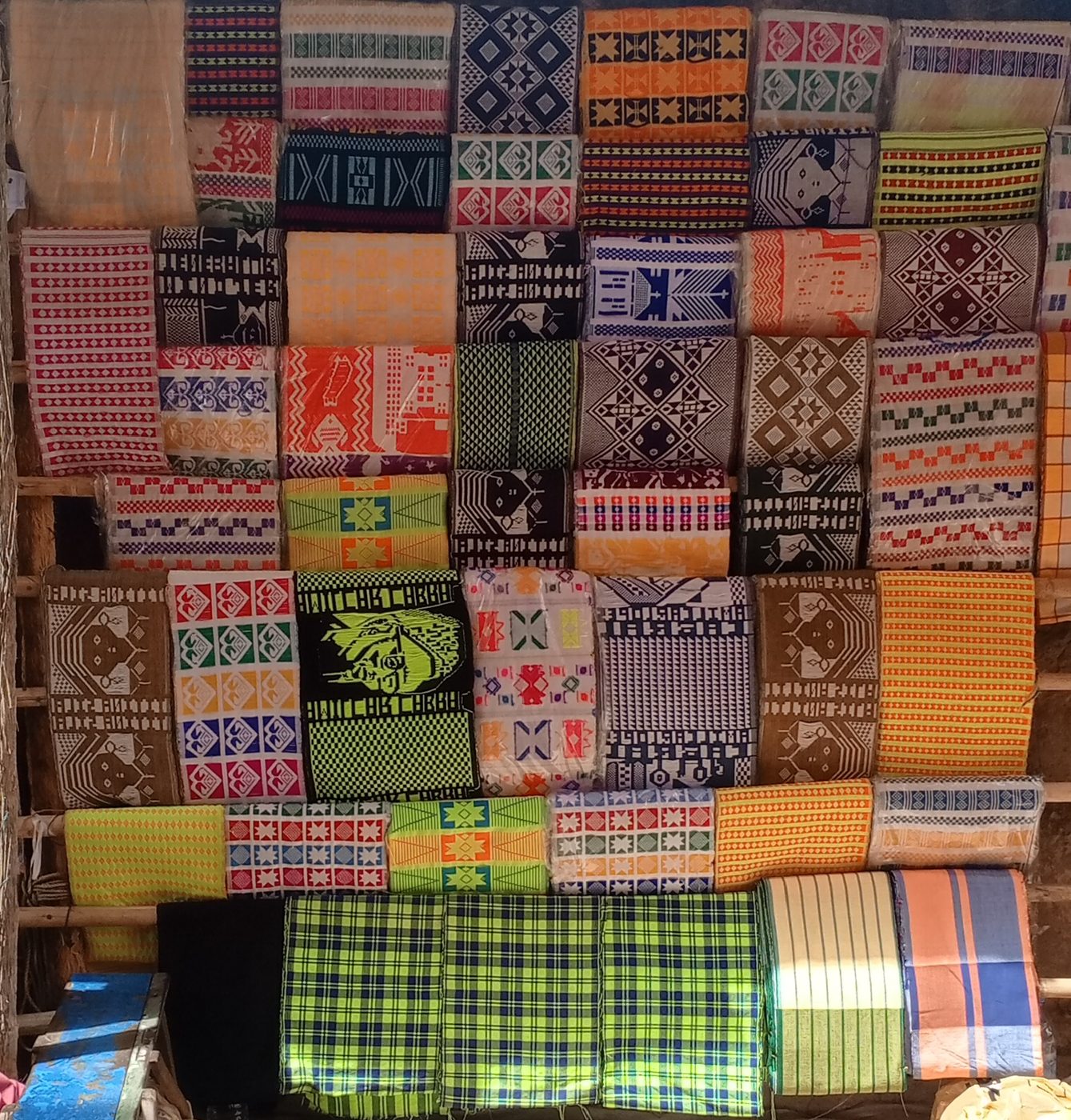
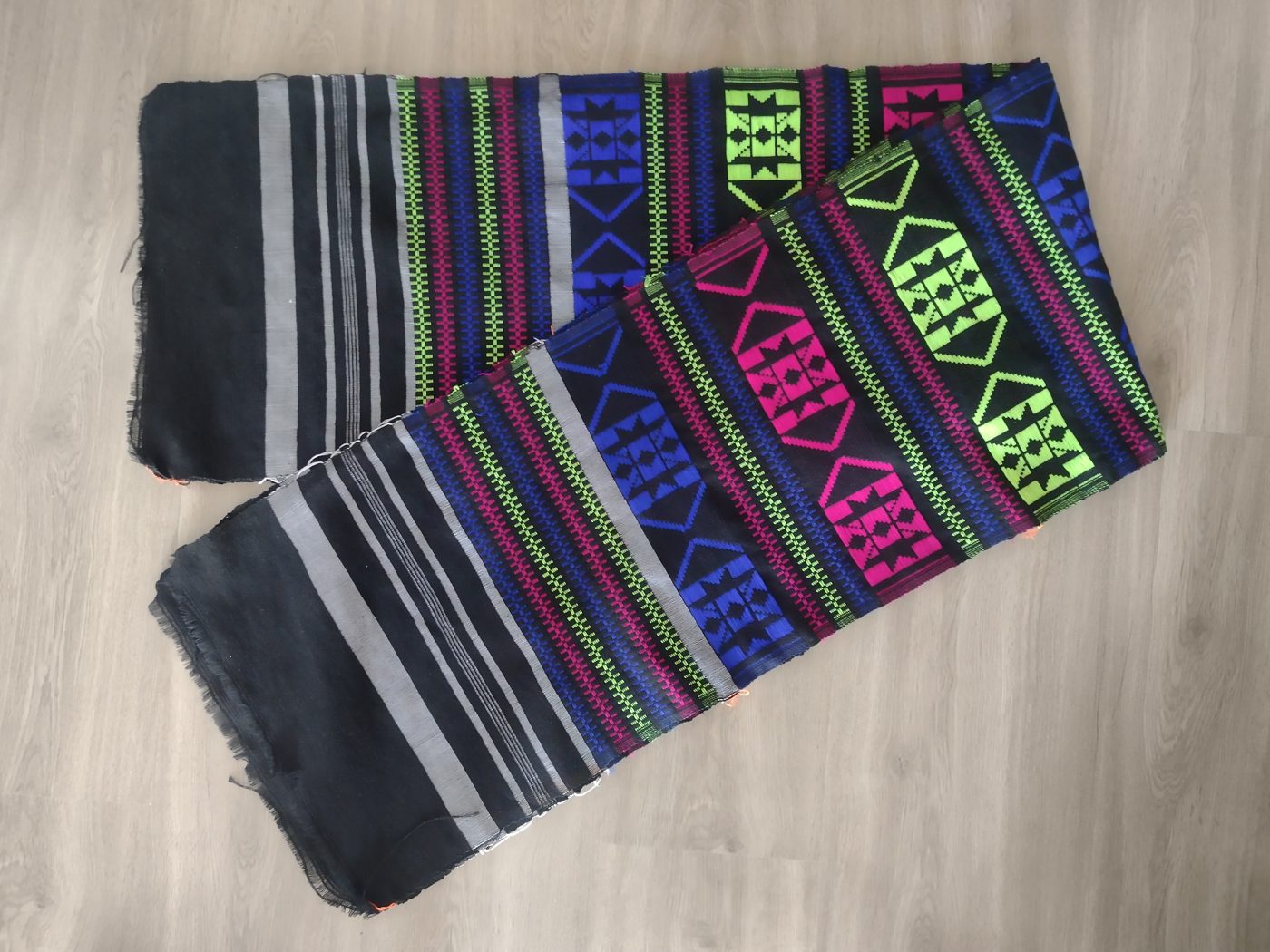
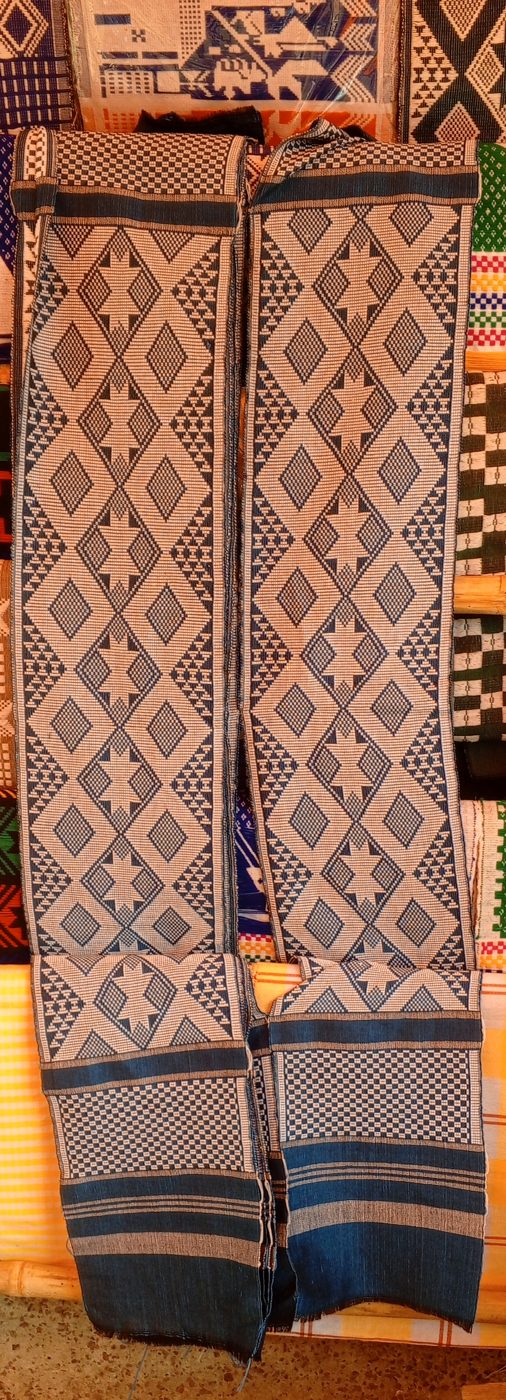
At the loom with weaver Sabino Feranandes Te.
Video: Ricci Shryock / Voice of America (VOA), “Guinea Bissau Weaver Takes Pride in Traditional Creations,” January 2, 2019. View original